Best Financial Analysis Models for Beginners
Corgage Team · · 1 min read
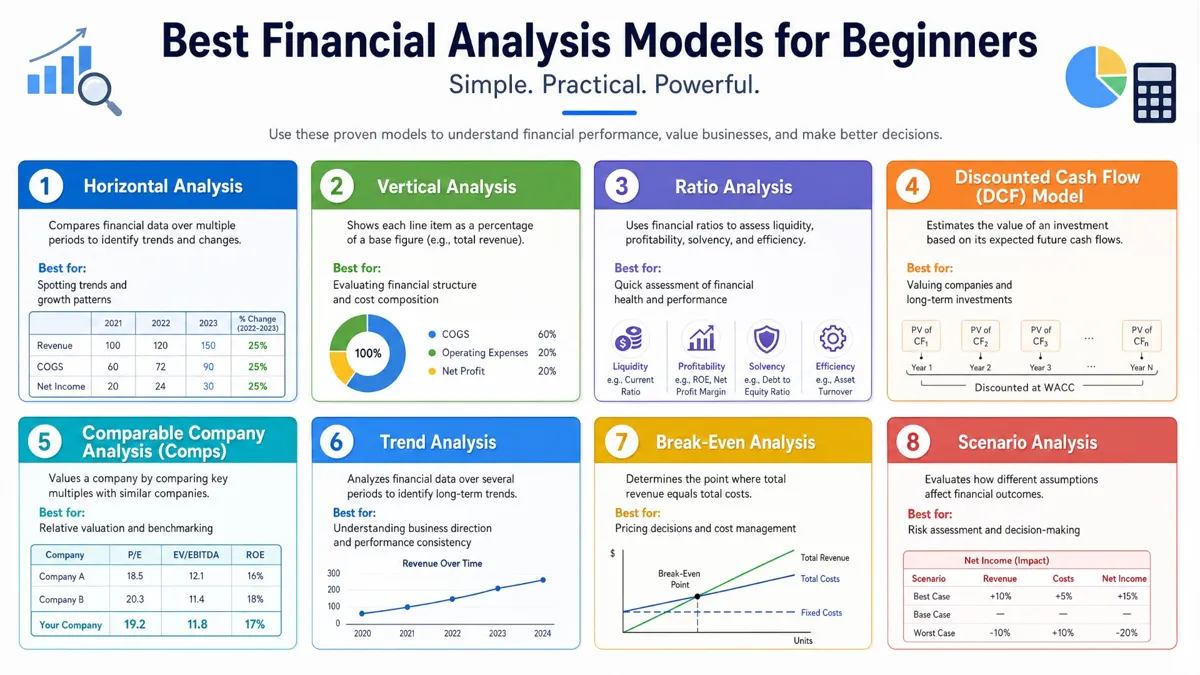
For beginners, the best financial analysis models are ratio analysis, common-size statements, budgeting, and break-even analysis.
Ratio analysis evaluates profitability, liquidity, efficiency, and debt using measures such as net margin, the current ratio, and debt-to-equity. Common-size statements express each line item as a percentage of a base figure, making it easier to compare companies and identify trends. Budgeting compares expected results with actual performance and helps estimate future cash flow, while break-even analysis shows the point where total revenue equals total costs.
After mastering these, you can move on to three-statement models, discounted cash flow analysis, and scenario analysis.
Corgage helps: upload your financial data and ask questions in plain language, and Vera walks you through the ratios, trends, and break-even points behind the numbers. You build real modeling intuition while Corgage handles the heavy calculations.
Financial Analysis
Run this analysis on your own data
Upload a CSV, Excel, or JSON file and Corgage profiles it, charts it and explains what changed. Start with free AI CSV analysis, see how Corgage works or compare plans and credits.
Start your free trialRelated data analysis guides
- What Skills Do You Need to Become a Market Research Analyst?
Strong analysis, communication, and curiosity — these are the skills that make a market research analyst effective. Here is the full list to build your career on.
- How to Break Into Market Research Without Experience
You can land a market research role without experience by building practical skills, creating portfolio projects, and applying with confidence. Here is a clear, step-by-step path in.
- How Much Do Market Research Analysts Make?
A clear look at what market research analysts earn — median pay, percentile ranges, and the factors that push salaries higher.