Building an Investment Analysis Portfolio to Land Your First Job
Corgage Team · · 1 min read
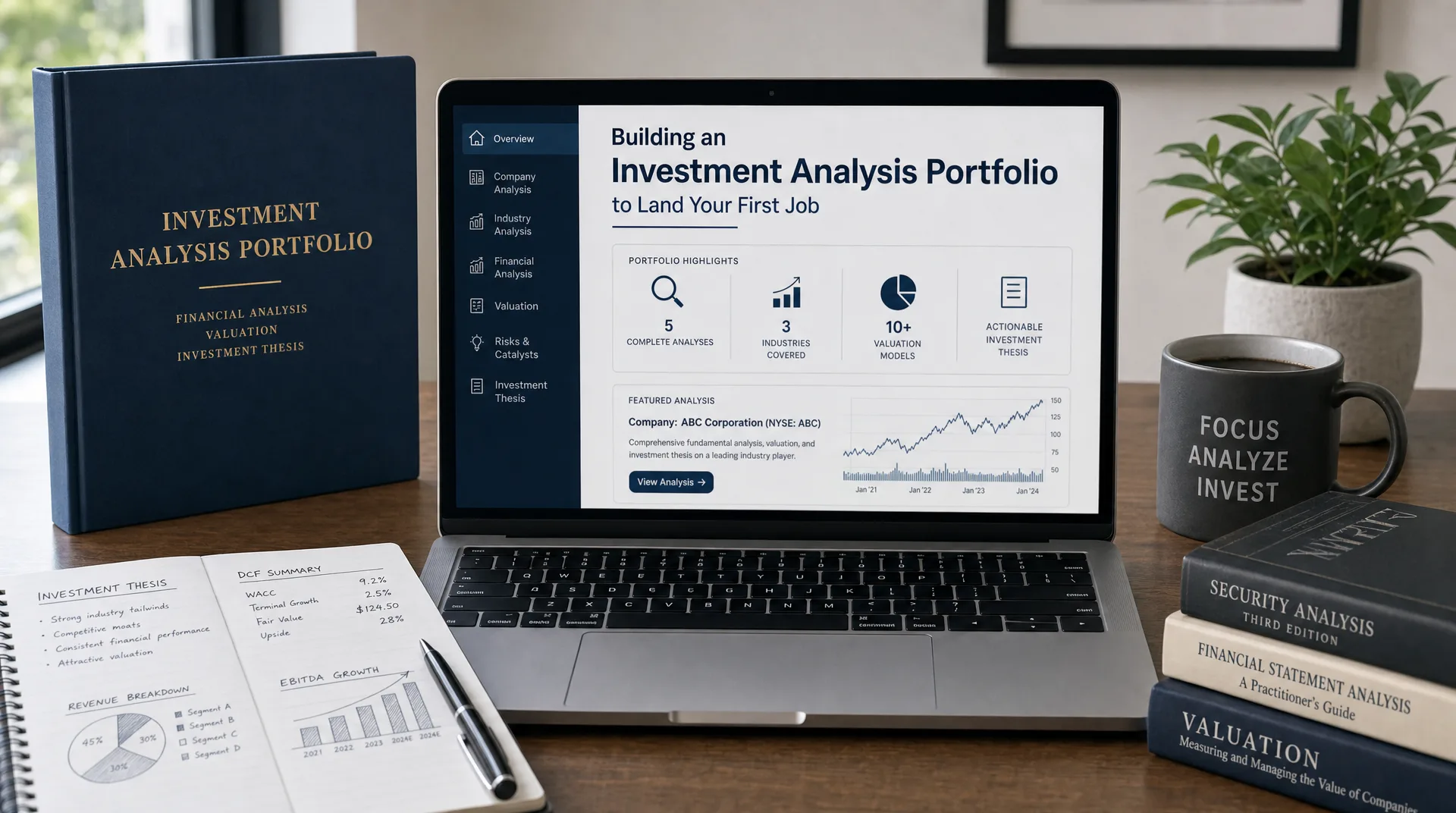
Build a portfolio with three to five high-quality projects, including an equity research report, three-statement financial model, DCF valuation, stock pitch, and sector or portfolio analysis. Each project should clearly explain the investment thesis, financial performance, valuation, risks, catalysts, and final recommendation. Use reliable sources such as company filings, earnings calls, investor presentations, and industry reports, and organize your work in a professional folder or online portfolio. Demonstrate practical skills in Excel, accounting, valuation, and, if possible, Python or SQL for data analysis. Tailor your projects to the role you want, such as equity research, investment banking, asset management, or private equity. Be prepared to defend every assumption in your models and explain how changes in growth, margins, or valuation multiples affect your conclusion.
Corgage helps aspiring and working analysts build and present investment analysis without the usual manual overhead. It helps you upload a file, ask questions in plain language, and get clear charts, forecasts, and reports you can share right away.
investment analystportfoliocareersfinance
Run this analysis on your own data
Upload a CSV, Excel, or JSON file and Corgage profiles it, charts it and explains what changed. Start with free AI CSV analysis, see how Corgage works or compare plans and credits.
Start your free trialRelated data analysis guides
- Should You Pursue a Career in Investment Analysis?
Intellectual challenge, continuous learning, and competitive pay — balanced against long hours and real pressure. Here is how to decide if investment analysis fits you.
- Investment Analyst Bonus Structure: What to Expect
Bonuses depend on firm type, seniority, performance, and investment results — here is what to expect and what to clarify before accepting an offer.
- How to Evaluate Stocks Like an Investment Analyst
A step-by-step framework covering business model, financials, management quality, scenarios, valuation, and risk — so you can evaluate a stock the way an analyst does.