How to Become an Investment Analyst Without Wall Street Experience
Corgage Team · · 1 min read
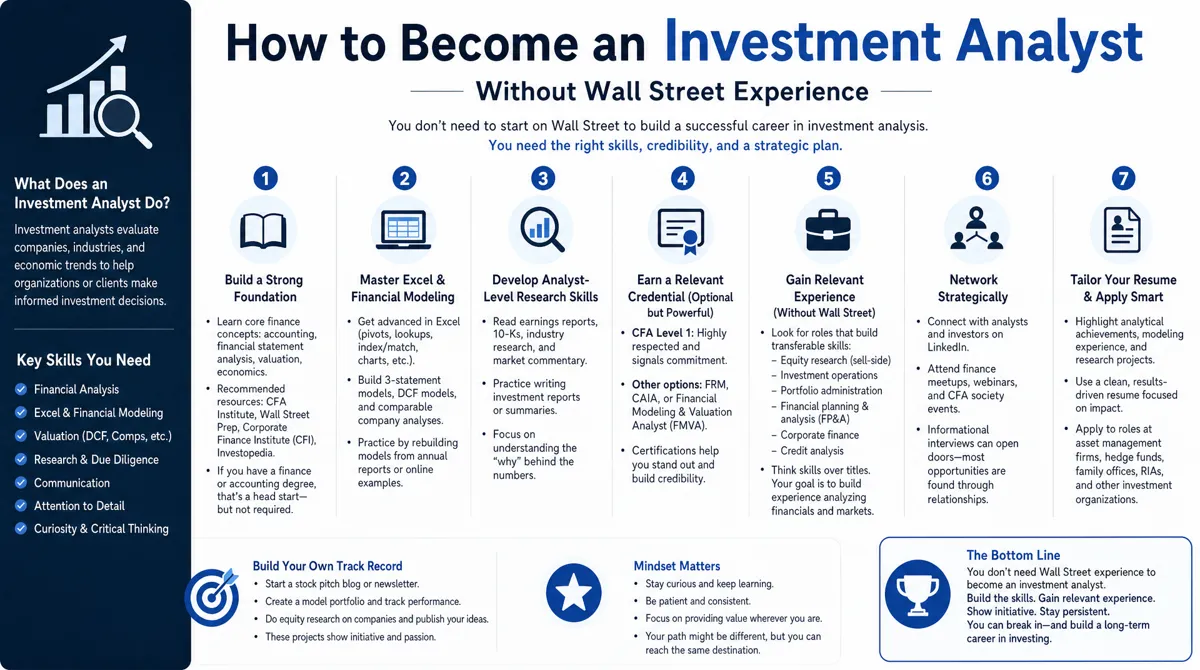
You can become an investment analyst without Wall Street experience by developing strong skills in accounting, financial modeling, valuation, Excel, and investment research. Build a portfolio of three to five detailed company analyses that demonstrate your ability to forecast performance, assess risks, and form clear investment recommendations. Consider earning a relevant credential, such as the CFA, though practical skills and work samples are often more important. Apply for entry-level or related roles such as financial analyst, credit analyst, portfolio analyst, investment operations analyst, or valuation analyst. Network with professionals by asking thoughtful questions and sharing your research rather than simply requesting a job. With consistent learning, strong evidence of your abilities, and persistence, you can transition into investment analysis through an adjacent role.
Corgage helps you build those analysis skills faster by turning raw data into clear charts, forecasts, and insights in minutes. It helps you practice real company and market analysis on your own files, no advanced tools required.
investingcareers
Run this analysis on your own data
Upload a CSV, Excel, or JSON file and Corgage profiles it, charts it and explains what changed. Start with free AI CSV analysis, see how Corgage works or compare plans and credits.
Start your free trialRelated data analysis guides
- Should You Pursue a Career in Investment Analysis?
Intellectual challenge, continuous learning, and competitive pay — balanced against long hours and real pressure. Here is how to decide if investment analysis fits you.
- Investment Analyst Bonus Structure: What to Expect
Bonuses depend on firm type, seniority, performance, and investment results — here is what to expect and what to clarify before accepting an offer.
- How to Evaluate Stocks Like an Investment Analyst
A step-by-step framework covering business model, financials, management quality, scenarios, valuation, and risk — so you can evaluate a stock the way an analyst does.