How to Get Your First Investment Analyst Job
Corgage Team · · 1 min read
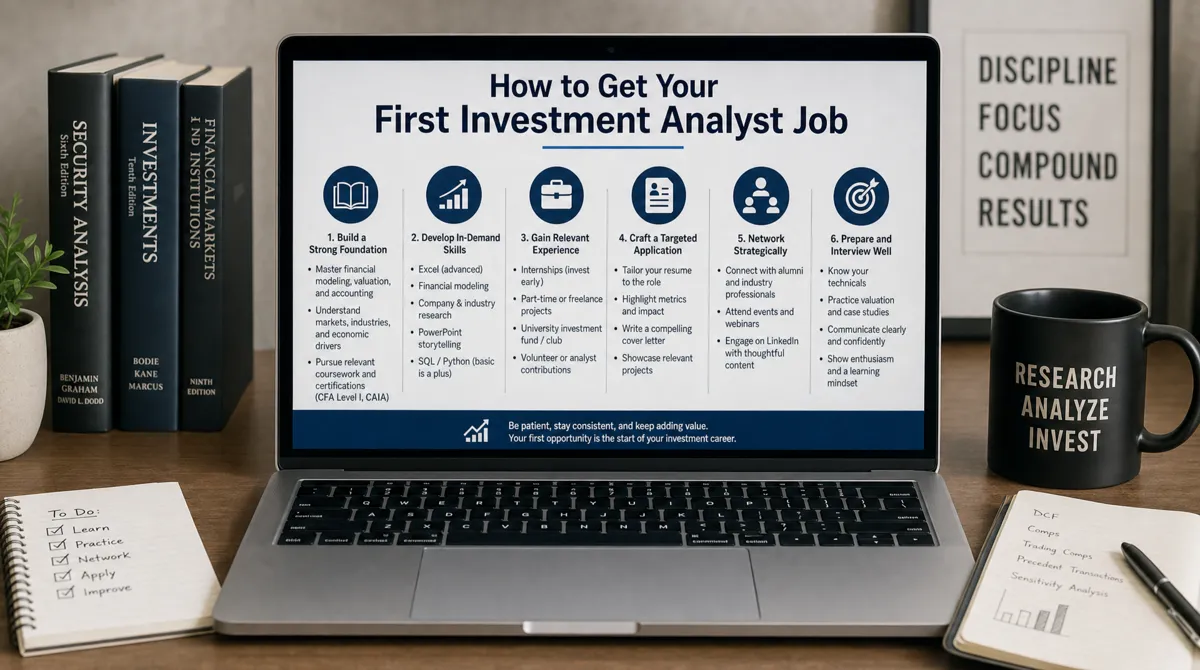
Define your target (IBD, equity research, asset management, or corporate development) and map the exact skills you need (3-statement modeling, DCF, comps, Excel mastery, basic SQL/Python).
Build those skills quickly by drafting a clean 3-statement model, running a DCF with sensitivity tables, and practicing equity pitches with a short, data-driven thesis.
Sharpen your resume and LinkedIn with impact-focused bullets (quantify results, show modeling work, and highlight relevant coursework and projects).
Gain hands-on experience through internships, independent stock pitches, and a small research memo or deck you can share with mentors or potential firms.
Network strategically via alumni, informational interviews, and targeted firm outreach, aiming for 8–12 conversations, plus a polished 1-page stock pitch and a ready-to-run model for interviews.
If you share your education, target firm type, and current skills, I'll tailor a concise 2-week action plan and a ready-to-use stock pitch.
Corgage helps aspiring analysts practice the exact skills employers test for, from building models to analyzing real datasets. It helps you walk into interviews with work you can actually show.
investment analystcareer advicefinance careersjob searchinvestment analyst jobs
Run this analysis on your own data
Upload a CSV, Excel, or JSON file and Corgage profiles it, charts it and explains what changed. Start with free AI CSV analysis, see how Corgage works or compare plans and credits.
Start your free trialRelated data analysis guides
- Should You Pursue a Career in Investment Analysis?
Intellectual challenge, continuous learning, and competitive pay — balanced against long hours and real pressure. Here is how to decide if investment analysis fits you.
- Investment Analyst Bonus Structure: What to Expect
Bonuses depend on firm type, seniority, performance, and investment results — here is what to expect and what to clarify before accepting an offer.
- How to Evaluate Stocks Like an Investment Analyst
A step-by-step framework covering business model, financials, management quality, scenarios, valuation, and risk — so you can evaluate a stock the way an analyst does.