How to Transition Into Investment Analysis From Another Career
Corgage Team · · 1 min read
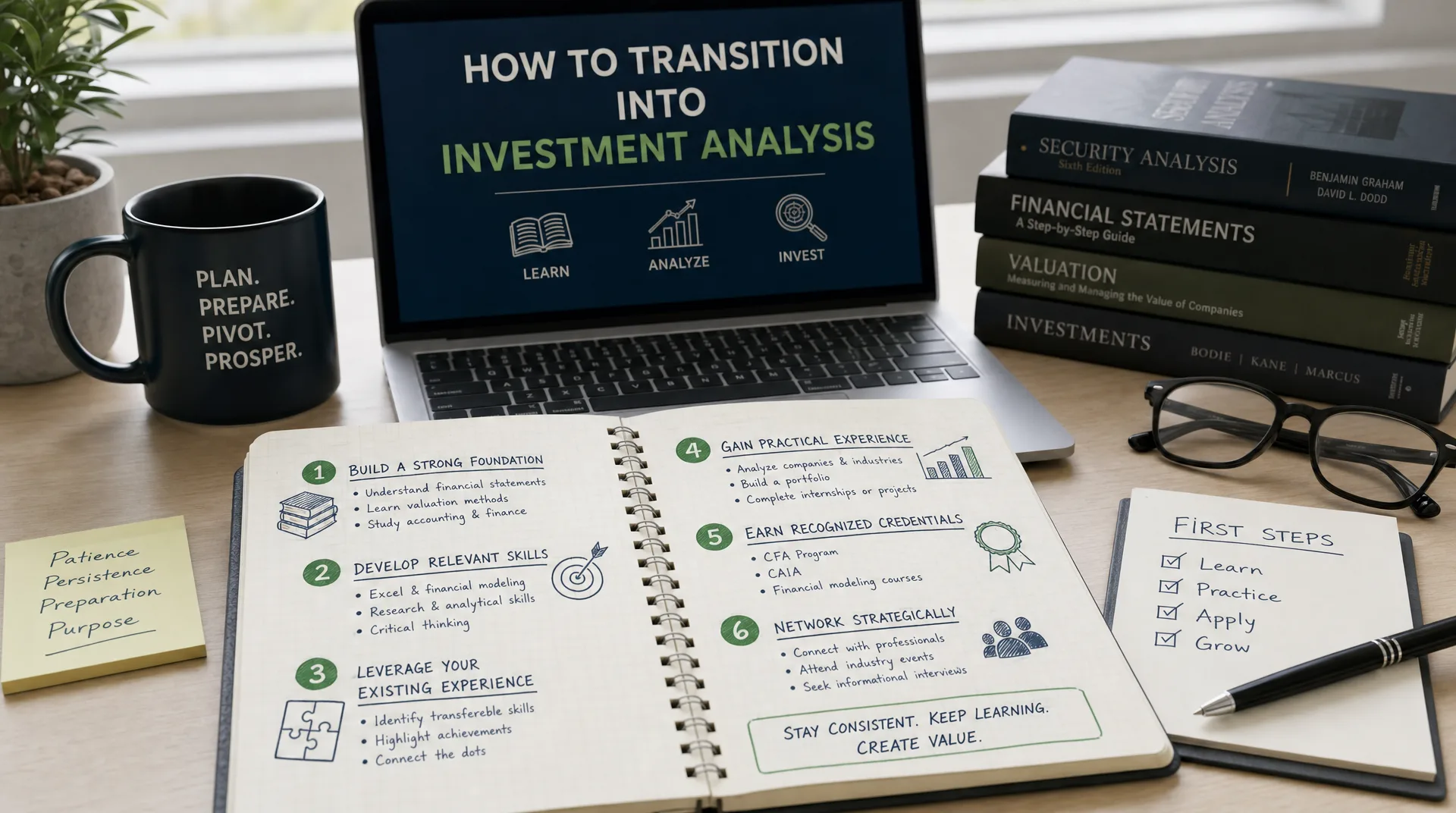
Transitioning into investment analysis starts with choosing a specific area, such as equity research, asset management, credit, or private equity. Build core skills in financial statements, Excel modeling, valuation, forecasting, and investment risk.
Use your current career as an advantage by highlighting transferable skills such as research, quantitative analysis, industry knowledge, or commercial judgment. Create practical work samples, including financial models, company analyses, and investment memos, to demonstrate your abilities.
Consider bridge roles like financial analyst, valuation analyst, credit analyst, risk analyst, or corporate development analyst, and pursue credentials such as the CFA if relevant. Finally, network with professionals, tailor your resume, and prepare to explain clearly why your previous experience makes you a strong investment-analysis candidate.
Corgage helps you make the move with evidence of real skill. It helps you analyze real financial data and build the work samples that show exactly what you can do.
investment analystcareer changefinance careersinvestment analysis
Run this analysis on your own data
Upload a CSV, Excel, or JSON file and Corgage profiles it, charts it and explains what changed. Start with free AI CSV analysis, see how Corgage works or compare plans and credits.
Start your free trialRelated data analysis guides
- Should You Pursue a Career in Investment Analysis?
Intellectual challenge, continuous learning, and competitive pay — balanced against long hours and real pressure. Here is how to decide if investment analysis fits you.
- Investment Analyst Bonus Structure: What to Expect
Bonuses depend on firm type, seniority, performance, and investment results — here is what to expect and what to clarify before accepting an offer.
- How to Evaluate Stocks Like an Investment Analyst
A step-by-step framework covering business model, financials, management quality, scenarios, valuation, and risk — so you can evaluate a stock the way an analyst does.