Investment Analysis Tools and Software You Should Know
Corgage Team · · 1 min read
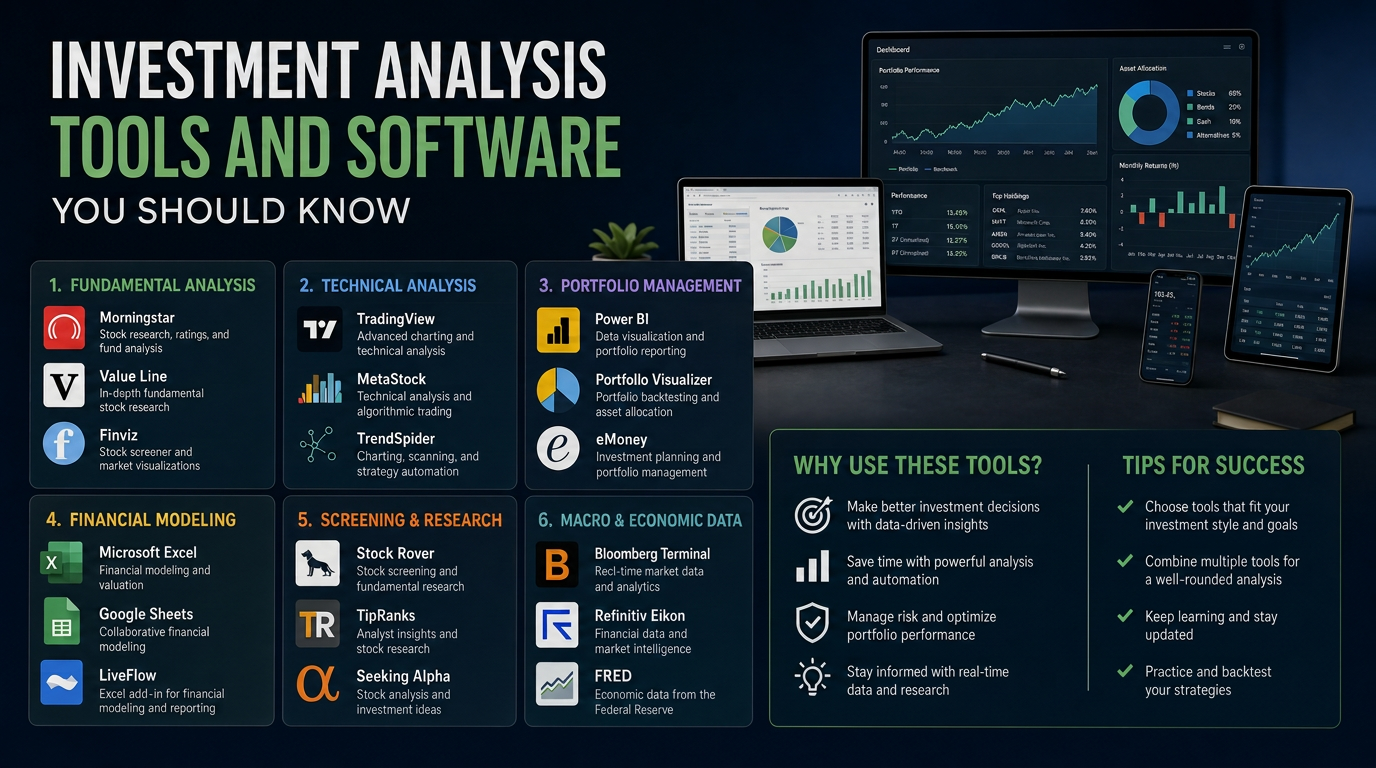
Investment analysts should know tools such as Bloomberg Terminal, LSEG Workspace, FactSet, and S&P Capital IQ for market data, company research, financial estimates, and valuation analysis. Microsoft Excel remains essential for financial modeling, including discounted cash flow, comparable-company, merger, and scenario analysis. Platforms such as Morningstar Direct, Portfolio Visualizer, and Power BI support portfolio management, performance measurement, risk analysis, and reporting. Python, R, SQL, and Jupyter Notebook help analysts automate data collection, analyze large datasets, and test investment strategies. Tools such as SEC EDGAR, BamSEC, and company investor-relations websites provide access to reliable primary-source filings and disclosures. Beginners should prioritize Excel, financial modeling, a market-data platform, and basic Python or SQL skills.
Corgage helps you consolidate much of this workflow in one place, from market data to automated analysis and reporting. It helps you spend less time wrestling with tools and more time making sound investment decisions.
investinginvestment analysttoolsfinance
Run this analysis on your own data
Upload a CSV, Excel, or JSON file and Corgage profiles it, charts it and explains what changed. Start with free AI CSV analysis, see how Corgage works or compare plans and credits.
Start your free trialRelated data analysis guides
- Should You Pursue a Career in Investment Analysis?
Intellectual challenge, continuous learning, and competitive pay — balanced against long hours and real pressure. Here is how to decide if investment analysis fits you.
- Investment Analyst Bonus Structure: What to Expect
Bonuses depend on firm type, seniority, performance, and investment results — here is what to expect and what to clarify before accepting an offer.
- How to Evaluate Stocks Like an Investment Analyst
A step-by-step framework covering business model, financials, management quality, scenarios, valuation, and risk — so you can evaluate a stock the way an analyst does.