Investment Analyst Interview Questions and How to Answer Them
Corgage Team · · 1 min read
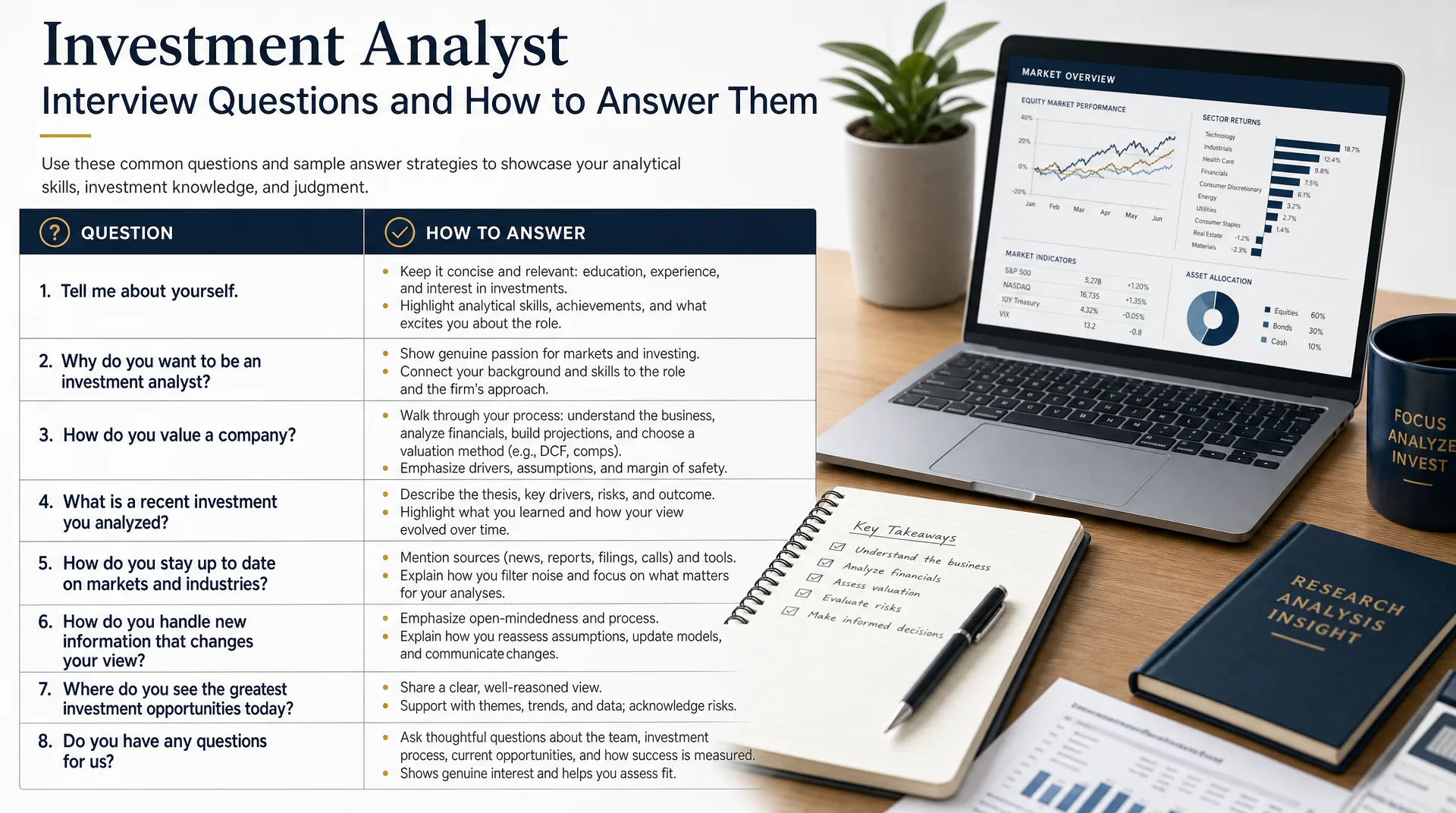
Investment analyst interviews usually test financial knowledge, valuation skills, investment judgment, and communication. Be prepared to explain your background, investment philosophy, company-analysis process, and reasons for wanting to join the firm. Technical questions may cover financial statements, DCF valuation, enterprise value, free cash flow, working capital, ROIC, and the impact of interest rates or inflation. You may also be asked to pitch a stock, so clearly explain the thesis, valuation, catalysts, risks, and what would change your mind. For behavioral questions, use specific examples that show analytical ability, teamwork, attention to detail, and how you learn from mistakes. Strong answers are concise, structured, evidence-based, and connected to real investment decisions.
Corgage helps candidates and working analysts sharpen exactly those skills without the usual manual overhead. It helps you upload a file, ask questions in plain language, and get clear charts, forecasts, and reports you can share right away.
investment analystinterviewcareersfinance
Run this analysis on your own data
Upload a CSV, Excel, or JSON file and Corgage profiles it, charts it and explains what changed. Start with free AI CSV analysis, see how Corgage works or compare plans and credits.
Start your free trialRelated data analysis guides
- Should You Pursue a Career in Investment Analysis?
Intellectual challenge, continuous learning, and competitive pay — balanced against long hours and real pressure. Here is how to decide if investment analysis fits you.
- Investment Analyst Bonus Structure: What to Expect
Bonuses depend on firm type, seniority, performance, and investment results — here is what to expect and what to clarify before accepting an offer.
- How to Evaluate Stocks Like an Investment Analyst
A step-by-step framework covering business model, financials, management quality, scenarios, valuation, and risk — so you can evaluate a stock the way an analyst does.