Understanding Expense Tracking and Revenue Projections
Corgage Team · · 1 min read
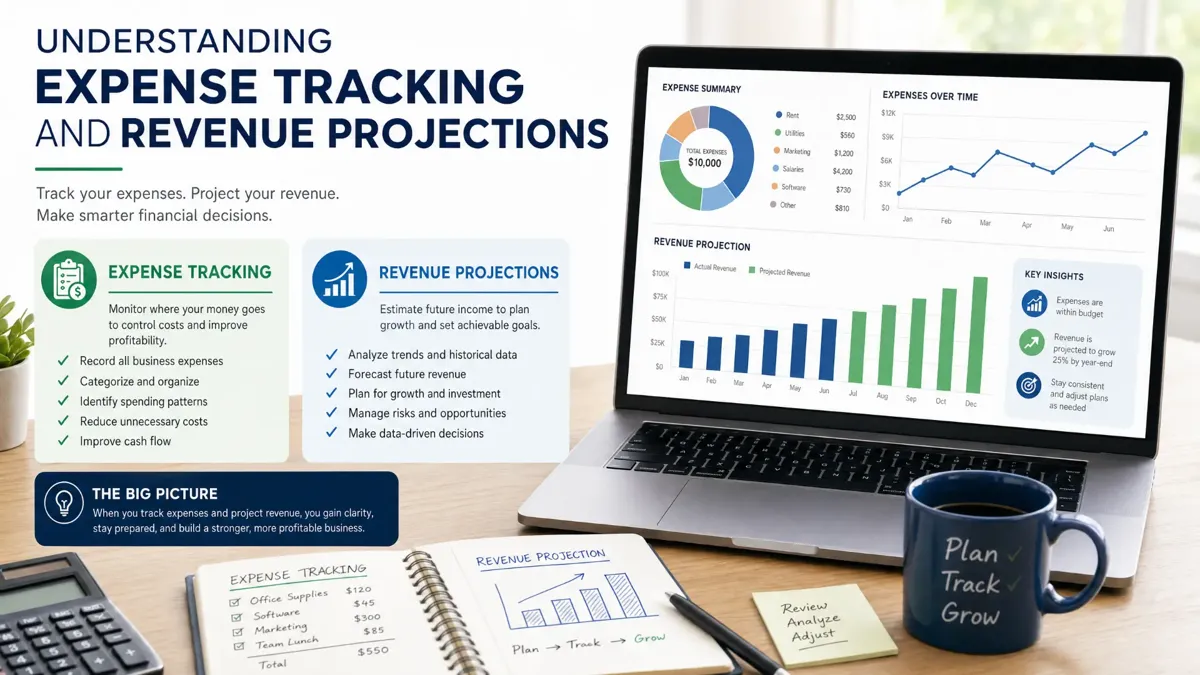
Expense tracking involves recording and organizing all business spending, such as payroll, supplies, rent, marketing, and taxes. It helps businesses understand where their money goes, control unnecessary costs, prepare taxes, and calculate accurate profits. Revenue projections estimate how much income a business expects to earn based on sales volume, pricing, past performance, and market conditions. Businesses often prepare conservative, expected, and optimistic projections to account for uncertainty. Comparing projected revenue with expected expenses helps determine future profit, cash-flow needs, and whether adjustments to spending or sales targets are necessary.
Corgage helps: bring your expense and revenue data together to spot trends and understand what is driving your results. Use those insights to compare scenarios and make more confident plans for spending, sales, and cash flow.
Financial AnalysisBusiness Planning
Run this analysis on your own data
Upload a CSV, Excel, or JSON file and Corgage profiles it, charts it and explains what changed. Start with free AI CSV analysis, see how Corgage works or compare plans and credits.
Start your free trialRelated data analysis guides
- What Skills Do You Need to Become a Market Research Analyst?
Strong analysis, communication, and curiosity — these are the skills that make a market research analyst effective. Here is the full list to build your career on.
- How to Break Into Market Research Without Experience
You can land a market research role without experience by building practical skills, creating portfolio projects, and applying with confidence. Here is a clear, step-by-step path in.
- How Much Do Market Research Analysts Make?
A clear look at what market research analysts earn — median pay, percentile ranges, and the factors that push salaries higher.