What's the Difference Between an Analyst and a Manager?
Corgage Team · · 1 min read
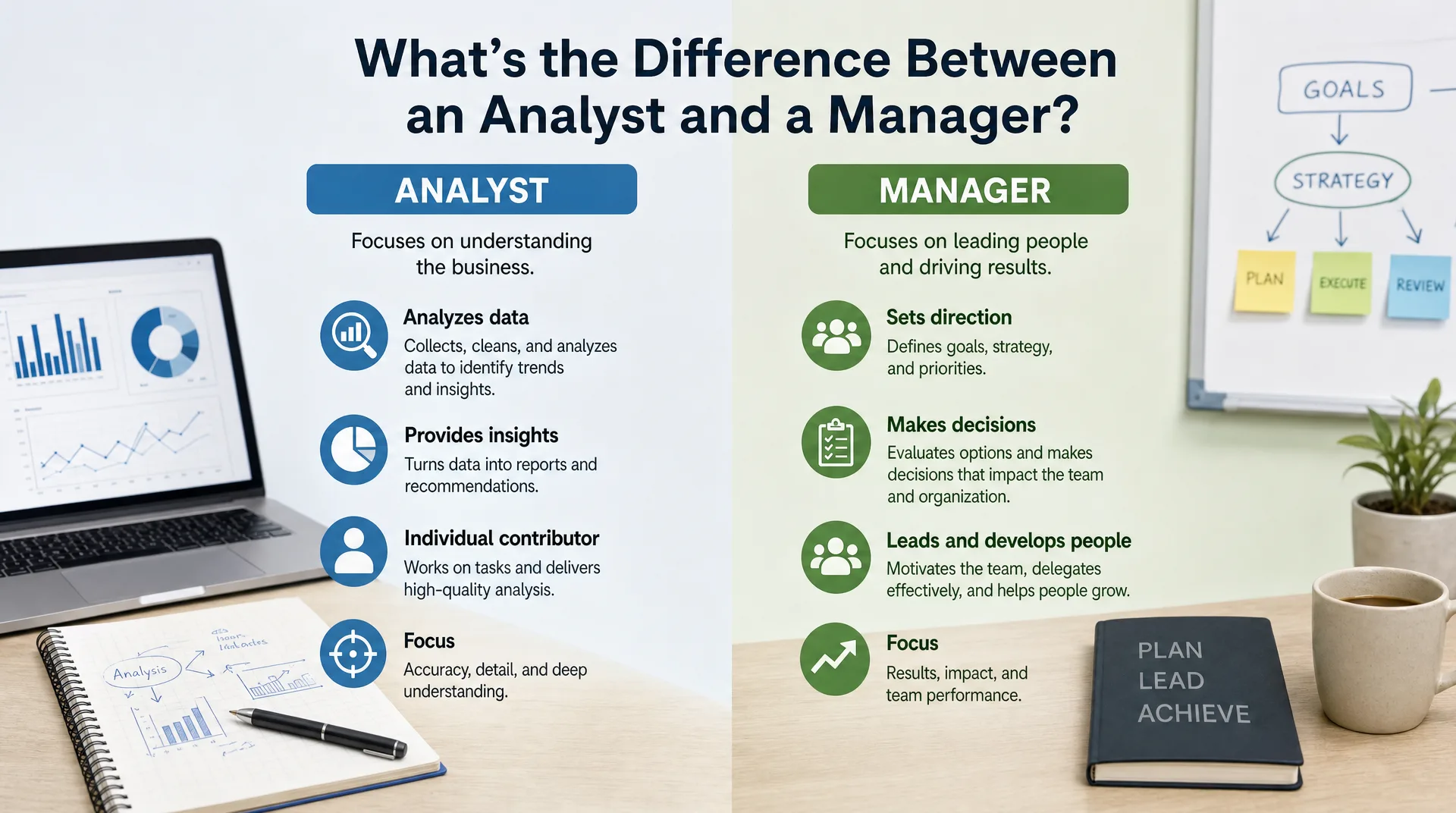
An analyst focuses on researching information, analyzing data, and preparing insights or recommendations. A manager focuses on leading people, setting priorities, making decisions, and achieving broader business goals. Analysts are usually responsible for the quality and accuracy of their own work, while managers are accountable for team performance and results. Analysts often develop technical expertise, whereas managers rely more heavily on leadership, communication, delegation, and judgment. Moving from analyst to manager means shifting from completing tasks personally to helping others succeed and delivering outcomes through the team.
Corgage helps analysts and managers alike turn raw data into clear, decision-ready insights. It helps you spend less time preparing numbers and more time acting on what they mean.
careeranalystmanagement
Run this analysis on your own data
Upload a CSV, Excel, or JSON file and Corgage profiles it, charts it and explains what changed. Start with free AI CSV analysis, see how Corgage works or compare plans and credits.
Start your free trialRelated data analysis guides
- Starting Your Own Investment Analysis Business
From choosing a niche and validating demand to building credibility and handling regulatory requirements, here is how to start an investment analysis business the right way.
- What Skills Do I Need to Be an Investment Analyst?
The key skills every investment analyst needs, from financial modeling and valuation to research, communication, and attention to detail.
- Should You Pursue a Career in Investment Analysis?
Intellectual challenge, continuous learning, and competitive pay — balanced against long hours and real pressure. Here is how to decide if investment analysis fits you.