Do I Need to Know SQL to Be a Data Analyst?
Corgage · September 3, 2026 · 1 min read
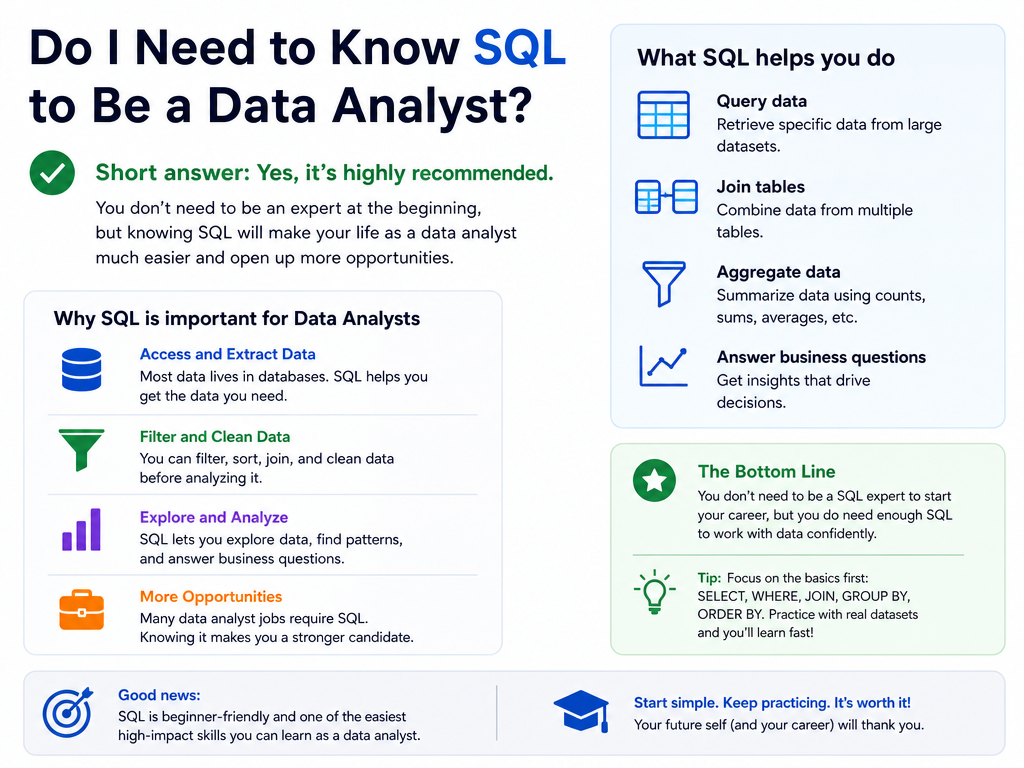
No, but knowing SQL is highly valuable for a data analyst. SQL helps you retrieve, filter, clean, and summarize data stored in databases. Most data analyst jobs expect at least basic SQL skills. You should learn commands such as `SELECT`, `WHERE`, `GROUP BY`, `JOIN`, and aggregate functions like `SUM` and `COUNT`. You do not need to become a database expert, but you should be able to use SQL to answer common business questions. A good learning path is Excel, SQL, data visualization, and basic statistics.
Corgage helps you explore and visualize data even if you are not comfortable writing SQL yet. Upload a file, ask a question in plain English, and Corgage builds the queries, charts, and summaries for you—so you can focus on insights while learning SQL at your own pace.
sqldata-analysiscareers
Run this analysis on your own data
Upload a CSV, Excel or JSON file and Corgage profiles it, charts it and explains what changed. Start with free AI CSV analysis, see how Corgage works or compare plans and credits.
Start free trialRelated data analysis guides
- Is Data Analysis a Stressful Career?
Most people can learn data analysis fundamentals in 2–4 months and become job-ready in 6–12 months by focusing on Excel, SQL, visualization, and portfolio projects.
- What Are the Best Entry-Level Data Jobs?
From Data Analyst to BI Analyst to Data Quality Analyst — a practical guide to the best entry-level data roles, what each one involves, and which fits your strengths.
- What's the Easiest Programming Language for Data Analysis?
SQL is the easiest and most essential language to learn first for data analysis, with Python close behind thanks to its readable syntax and powerful libraries like Pandas and Matplotlib.