What's the Easiest Programming Language for Data Analysis?
Corgage · September 2, 2026 · 1 min read
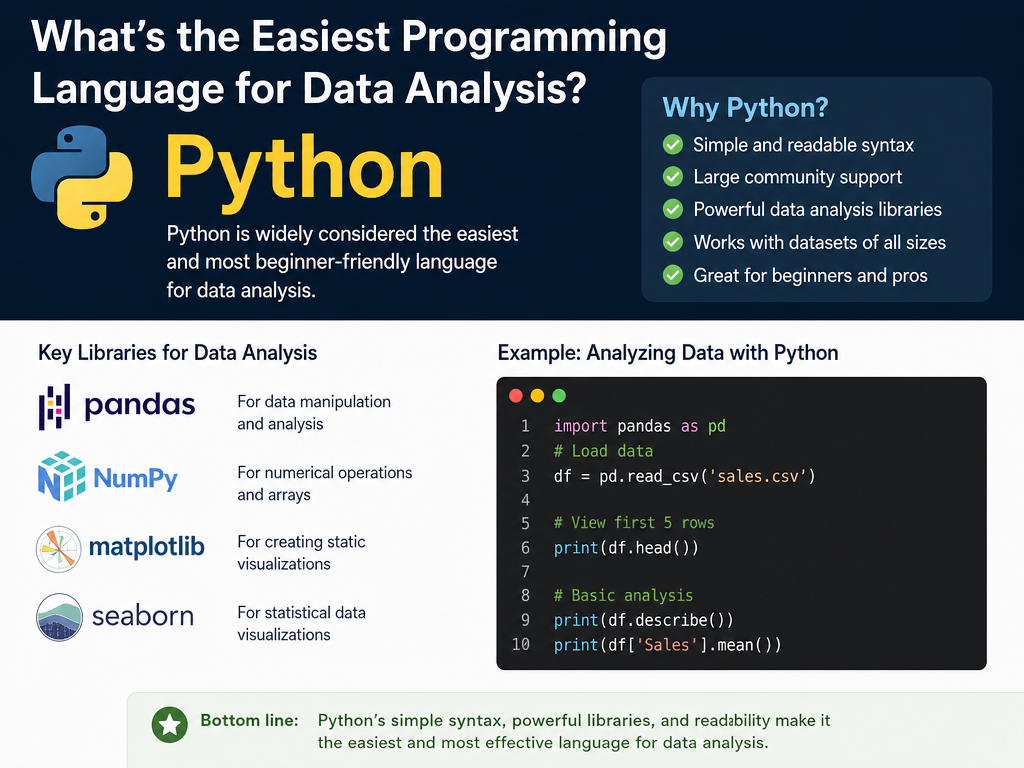
Python is generally the easiest programming language for data analysis.
It has beginner-friendly syntax and widely used libraries such as:
- **pandas** for manipulating tables and datasets
- **NumPy** for numerical calculations
- **Matplotlib** and **Seaborn** for charts
- **Jupyter Notebook** for interactive analysis
- **scikit-learn** for machine learning
**R** is another excellent choice, especially for statistics and academic research, but Python is usually easier to apply across data analysis, automation, web development, and machine learning.
For most beginners: **start with Python and learn pandas, basic SQL, and data visualization.**
Corgage makes data analysis accessible even if you are still learning Python. You can upload datasets, generate charts, and build predictive models through a simple interface—no coding required. As your skills grow, Corgage helps you apply what you learn to real business questions faster.
data-analysispythonsqlcareers
Run this analysis on your own data
Upload a CSV, Excel or JSON file and Corgage profiles it, charts it and explains what changed. Start with free AI CSV analysis, see how Corgage works or compare plans and credits.
Start free trialRelated data analysis guides
- Is Data Analysis a Stressful Career?
Most people can learn data analysis fundamentals in 2–4 months and become job-ready in 6–12 months by focusing on Excel, SQL, visualization, and portfolio projects.
- What Are the Best Entry-Level Data Jobs?
From Data Analyst to BI Analyst to Data Quality Analyst — a practical guide to the best entry-level data roles, what each one involves, and which fits your strengths.
- Do I Need to Know SQL to Be a Data Analyst?
Yes — SQL is a non-negotiable requirement for data analysts. Here’s why it’s the universal language of company databases and the foundation of the analyst toolkit.