Warren Buffett's 70/30 Investing Rule Explained
Corgage Team · · 1 min read
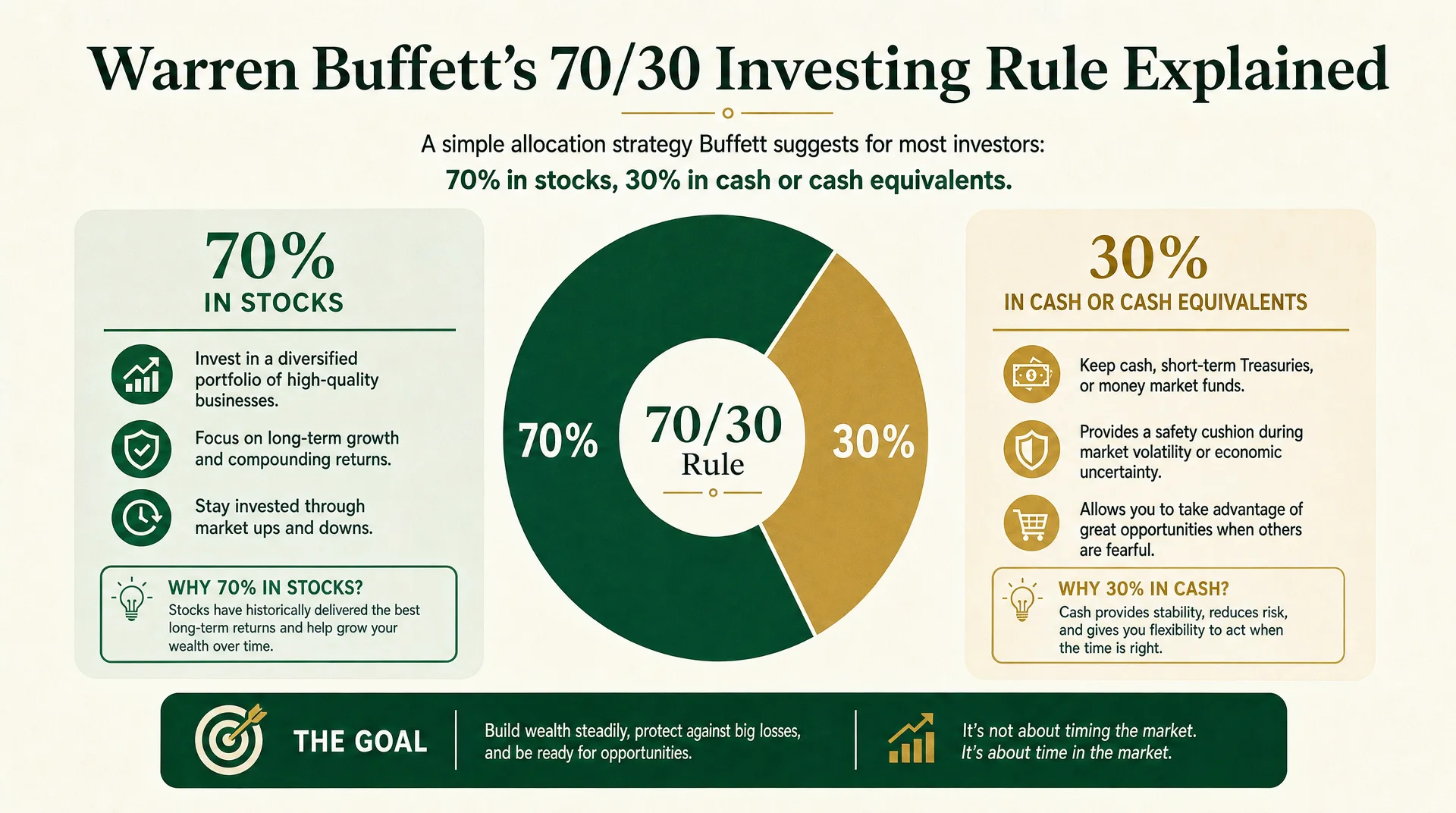
Warren Buffett's 70/30 investing rule generally means putting 70% of your money in stocks and 30% in bonds or cash equivalents. The stock portion provides long-term growth, while bonds and cash help reduce volatility and provide stability. For example, a $100,000 portfolio would hold $70,000 in a diversified stock index fund and $30,000 in high-quality bonds or Treasury securities. Investors can periodically rebalance the portfolio when market movements cause the allocation to drift. Buffett's more famous recommendation is actually closer to 90% in a low-cost S&P 500 index fund and 10% in short-term Treasury bills. The main lesson is to keep costs low, diversify broadly, invest patiently, and choose an allocation that matches your risk tolerance.
Corgage helps you turn your raw data files into clear, plain-English analysis in minutes, so you can see exactly where your money stands before you set an allocation. It helps you track balances, spot trends, and model what-if scenarios across your investments without needing to learn spreadsheet formulas or hire an analyst.
warren buffettinvesting70/30 ruleasset allocationpersonal financeinvestment basics
Run this analysis on your own data
Upload a CSV, Excel, or JSON file and Corgage profiles it, charts it and explains what changed. Start with free AI CSV analysis, see how Corgage works or compare plans and credits.
Start your free trialRelated data analysis guides
- How to Evaluate Stocks Like an Investment Analyst
A step-by-step framework covering business model, financials, management quality, scenarios, valuation, and risk — so you can evaluate a stock the way an analyst does.
- Investment Analysis Tools and Software You Should Know
From Bloomberg Terminal and Excel to Python and SEC EDGAR, here are the investment analysis tools every analyst should know, and where beginners should start.
- How to Write Investment Research That Gets Results
Great investment research starts with a clear recommendation and thesis, supports every claim with evidence, and presents bear, base, and bull scenarios. Here is how to write research that drives better decisions.