What Does an Investment Analyst Actually Do Every Day?
Corgage Team · · 1 min read
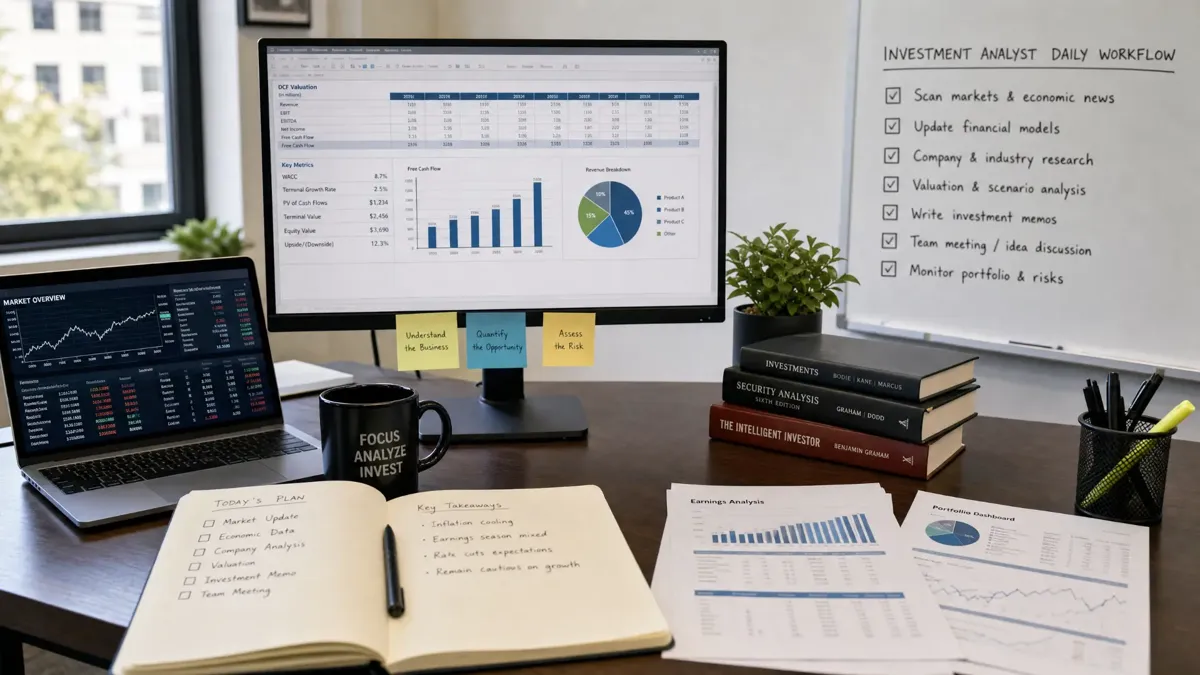
An investment analyst researches companies, industries, markets, and economic trends to help determine where money should be invested. They review financial statements, company news, earnings reports, and market data.
Much of their time is spent building financial models to estimate future performance and calculate an investment's value. They may also speak with company executives, industry experts, brokers, and other professionals.
Analysts write reports and present recommendations to portfolio managers or clients, explaining potential returns and risks. They also monitor existing investments and update their recommendations as new information becomes available.
Corgage helps: upload your data and get clear, analyst-quality analysis, charts, and forecasts in minutes instead of hours. It helps you stay ahead — with monitoring and evidence-backed insights that keep working long after the first question.
investingfinancial analysiscareer guides
Run this analysis on your own data
Upload a CSV, Excel, or JSON file and Corgage profiles it, charts it and explains what changed. Start with free AI CSV analysis, see how Corgage works or compare plans and credits.
Start your free trialRelated data analysis guides
- How to Evaluate Stocks Like an Investment Analyst
A step-by-step framework covering business model, financials, management quality, scenarios, valuation, and risk — so you can evaluate a stock the way an analyst does.
- Investment Analysis Tools and Software You Should Know
From Bloomberg Terminal and Excel to Python and SEC EDGAR, here are the investment analysis tools every analyst should know, and where beginners should start.
- How to Write Investment Research That Gets Results
Great investment research starts with a clear recommendation and thesis, supports every claim with evidence, and presents bear, base, and bull scenarios. Here is how to write research that drives better decisions.